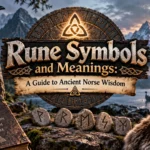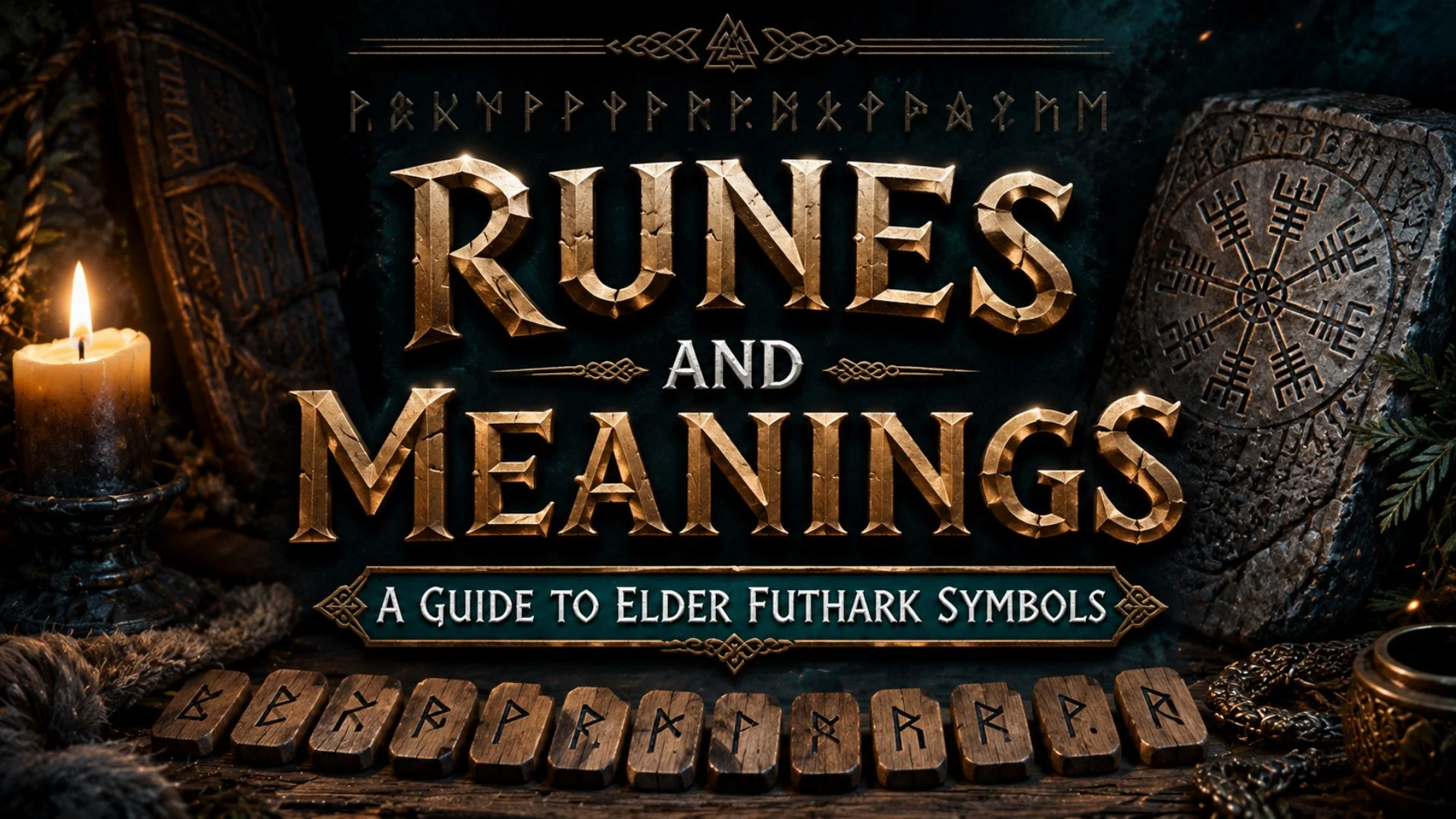
For over two thousand years, runes have served as more than just an alphabet—they represent a profound system of wisdom, magic, and divination. These ancient symbols, known collectively as runes and meanings, originated in Northern Europe and continue to captivate seekers of spiritual knowledge today. The word “rune” itself comes from the Old Norse rún, meaning “secret” or “mystery,” which perfectly captures the essence of these powerful symbols.
The runic alphabet, known as the Elder Futhark, consists of 24 characters divided into three groups called ættir (families) of eight runes each. According to Norse mythology, the god Odin discovered the runes through a profound act of self-sacrifice—he hung from the World Tree Yggdrasil for nine days and nights, gazing into the depths of the underworld, until the runes revealed themselves to him. This mythological origin underscores the sacred nature of these symbols, which practitioners use for communication, divination, and magical work. This comprehensive guide explores each of the 24 Elder Futhark runes and their meanings, from the wealth-bringing Fehu to the transformative Dagaz.
Quick Answer
Runes and meanings refer to the 24 symbols of the Elder Futhark alphabet, each carrying specific interpretations for divination and personal guidance. Key runes include Fehu (wealth, success), Ansuz (wisdom, communication), Raidho (journey, movement), and Algiz (protection, defense). Norse mythology attributes the discovery of runes to the god Odin, who sacrificed himself to gain their wisdom. Today, people use runes for self-development, spiritual growth, and connecting with ancient Northern European traditions.
Meaning Overview Table
| Aspect | Meaning |
|---|---|
| Definition | Ancient Germanic alphabet symbols used for writing, divination, and magic, each with specific interpretations |
| Pronunciation | ROONZ and MEE-ningz |
| Part of Speech | Noun phrase |
| Usage | “Many people study runes and meanings for personal guidance and spiritual insight.” |
| Context | Divination, Norse mythology, spiritual practice, historical studies |
Main Meaning
Definition
Runes and meanings refer to the symbolic interpretations assigned to each character of the runic alphabets, particularly the Elder Futhark. Each rune functions as both a phonetic letter and a symbol with its own name, mythological associations, and divinatory significance. Unlike modern alphabets that only convey sounds, runes carry layers of meaning that connect to ancient Germanic and Norse cosmology.
Origin
The runic alphabets emerged among the Germanic peoples of Northern Europe around the 2nd century CE. The Elder Futhark, the oldest known runic alphabet, takes its name from the first six runes: Fehu, Uruz, Thurisaz, Ansuz, Raidho, and Kaunan. Scholars believe runes evolved from Old Italic alphabets, possibly through contact with the Roman Empire. However, Norse mythology offers a more mystical origin: the god Odin discovered the runes through self-sacrifice. In the Poetic Edda, Odin says, “I hung from that windswept tree for nine full nights, wounded with a spear, given to Odin, myself to myself.” Through this ordeal, the runes appeared to him, granting him their wisdom and power.
Context
Runes appear in various contexts:
- Historical inscriptions: Thousands of runic inscriptions survive on stone, wood, bone, and metal
- Divination: People use runes as a tool for spiritual guidance and self-reflection
- Magical practice: Practitioners use runes in protective charms and rituals
- Modern spirituality: Runes are popular in Norse-inspired spiritual movements
- Art and design: Runes appear in jewelry, tattoos, and decorative arts
Modern Usage
Today, runes have experienced a revival among spiritual seekers and those interested in Norse traditions. People use runes for divination, meditation, and as symbols of Norse heritage. Modern practitioners often draw a single rune or a spread of multiple runes to gain insight into specific questions or situations. Many also use runes as talismans, wearing them as jewelry or carrying them as stones for protection and guidance.
Detailed Explanation
Literal Meaning
Literally, runes are characters from a writing system used in Northern Europe before the adoption of the Latin alphabet. The Elder Futhark consists of 24 runes, each representing a specific sound and carrying a name with symbolic meaning.
Common Meaning
Commonly, people understand runes as symbols of ancient wisdom. Each rune carries a specific meaning that can apply to different aspects of life, such as love, work, health, and spirituality. For example, Fehu represents wealth and success, while Gebo represents partnerships and gifts.
Divinatory Meaning
In divination, runes serve as guides for personal growth and decision-making. The interpretations vary based on whether the rune appears in the upright or reversed position. Some practitioners use a single-rune draw for daily guidance, while others use complex spreads for deeper insight.
Text Meaning
In written and online contexts, runes and meanings refer to the extensive body of literature, websites, and resources that decode these ancient symbols. Many guides exist to help people understand the significance of specific runes and how to use them in modern practice.
Cultural Meaning
Culturally, runes represent the heritage of the Germanic and Norse peoples. They have become symbols of Northern European identity, spirituality, and resistance against cultural erasure. Modern movements, including Ásatrú (the modern Norse faith), use runes as sacred symbols in their practice.
Magical Meaning
In historical and modern contexts, practitioners have used runes for magical purposes. Each rune possesses a specific magical property, such as protection, healing, or binding. For example, Algiz offers protection, while Eihwaz provides strength and stability.
Examples Table
| Example | Meaning |
|---|---|
| Fehu | Wealth, success, and material abundance |
| Uruz | Strength, courage, and raw potential |
| Thurisaz | Protection, conflict, and powerful forces |
| Ansuz | Wisdom, communication, and divine insight |
| Raidho | Journey, movement, and change |
| Kaunan | Transformation, fire, and knowledge |
| Gebo | Partnership, gifts, and balance |
| Wunjo | Joy, harmony, and community |
| Hagalaz | Disruption, change, and radical transformation |
| Nauthiz | Need, endurance, and personal growth |
| Isa | Stillness, pause, and introspection |
| Jera | Harvest, reward, and cycles of time |
| Eihwaz | Strength, endurance, and protection |
| Perthro | Mystery, hidden knowledge, and destiny |
| Algiz | Protection, defense, and spiritual connection |
| Sowilo | Success, vitality, and wholeness |
| Tiwaz | Justice, sacrifice, and leadership |
| Berkanan | Growth, fertility, and new beginnings |
| Ehwaz | Change, movement, and partnership |
| Mannaz | Humanity, community, and self-improvement |
| Laguz | Intuition, flow, and subconscious power |
| Inguz | Potential, fertility, and new beginnings |
| Dagaz | Transformation, awakening, and clarity |
| Othala | Heritage, home, and spiritual values |
Related Meanings Table
| Related Term | Meaning |
|---|---|
| Elder Futhark | The oldest runic alphabet with 24 runes |
| Younger Futhark | A later 16-rune alphabet used in Scandinavia |
| Anglo-Saxon Futhorc | A runic alphabet with up to 33 runes |
| Bindrune | A combination of two or more runes for magical purposes |
| Rune stone | A stone with runic inscriptions, often commemorative |
| Rune casting | The practice of throwing runes for divination |
| Rune reading | Interpreting runes for personal guidance |
| Galdr | A type of runic magic using chanting or singing |
| Seidr | Norse magic associated with the goddess Freyja |
| Ásatrú | Modern Norse pagan religion using runes |
| Yggdrasil | The World Tree in Norse cosmology |
| Odin | The chief Norse god who discovered the runes |
| Norns | The three fate-weaving goddesses in Norse mythology |
| Futhark | The runic alphabet (from the first six runes) |
| Rune poem | A medieval poem describing each rune’s meaning |
Common Uses
People use runes in several ways:
Divination: Rune casting involves drawing one or more runes from a bag or cloth and interpreting their meanings based on the question asked. Common spreads include a single-rune draw, a three-rune spread (past, present, future), and more complex layouts.
Meditation: Practitioners meditate on specific runes to connect with their energy and wisdom. For example, meditating on Ansuz can enhance communication skills, while meditating on Algiz provides a sense of protection.
Talismans: People wear runes as jewelry or carry them as stones for personal empowerment. Each rune offers specific benefits, such as Fehu for financial success or Gebo for harmonious relationships.
Ritual and Magic: Historically, practitioners carved runes on objects for magical purposes. Modern practitioners continue this practice, using runes in rituals, charms, and offerings.
Art and Design: Runes appear in tattoos, jewelry, and decorative items, representing Norse heritage, personal identity, or spiritual beliefs.
Common Mistakes
| Mistake | Correction |
|---|---|
| Confusing runes with the Latin alphabet | Runes belong to a different writing system with its own cultural context |
| Using runes without historical understanding | Research the historical and cultural background of runes |
| Mispronouncing rune names | Learn the correct Old Norse pronunciation |
| Believing runes are “good” or “bad” | Each rune has both positive and challenging aspects |
| Assuming all runic symbols are Norse | Some runes come from other runic alphabets |
| Overcomplicating rune interpretation | Start with the basic meanings and build from there |
| Confusing runes with other symbols | Runes are distinct from other esoteric symbols |
| Using runes without respect | Treat runes with cultural sensitivity and historical understanding |
| Believing runes can predict the future | Runes guide personal growth, not absolute prediction |
| Ignoring the reversed meaning | Some traditions include reversed meanings for additional nuance |
Related Questions
What are the meanings of the 24 runes?
Each of the 24 Elder Futhark runes has a specific meaning. For example, Fehu represents wealth, Uruz symbolizes strength, and Ansuz stands for wisdom and communication.
What are the runes and their meanings in magic?
In magical practice, runes serve specific purposes: Fehu attracts wealth, Algiz offers protection, and Laguz enhances intuition.
What is the difference between Elder Futhark and Younger Futhark?
The Elder Futhark has 24 runes and dates to the 2nd century CE, while the Younger Futhark has 16 runes and emerged in Scandinavia around the 8th century CE.
What do runes mean in Norse mythology?
In Norse mythology, Odin discovered the runes through self-sacrifice, and they represent wisdom, fate, and the cosmic order.
Are runes still used today?
Yes, people use runes for divination, meditation, jewelry, tattoos, and spiritual practice.
What is a bindrune?
A bindrune combines two or more runes to create a symbol for a specific magical purpose, such as protection or love.
How do I read runes for divination?
People draw runes from a bag or cloth and interpret them based on their meanings and positions in a spread.
What is the origin of runes?
Runes originated among the Germanic peoples of Northern Europe, likely derived from Old Italic alphabets, but Norse mythology attributes their discovery to Odin.
FAQs
What is the most powerful rune?
Sowilo (sun) is often considered a powerful rune for success, vitality, and clarity. Algiz offers strong protection, and Fehu brings wealth. The “most powerful” rune depends on the intended purpose.
What rune means life?
Berkanan represents growth and new life, while Inguz symbolizes fertility and potential. Many consider these runes as representing life’s continuous renewal.
What rune means love?
Gebo represents partnerships and gifts, making it a rune of love and balance. Wunjo signifies joy and harmony within relationships.
What rune means death?
Hagalaz represents disruptive change, and Isa symbolizes stillness. Neither directly represents death, but both relate to transformation and the end of one cycle.
What rune means protection?
Algiz (also known as Elhaz) is the rune of protection and defense. It offers both physical and spiritual safety.
What is the rune of wisdom?
Ansuz is the rune of wisdom, communication, and divine insight. It represents the god Odin and his gift of knowledge.
What rune means strength?
Uruz symbolizes strength, courage, and raw potential. Eihwaz also represents endurance and resilience.
What rune means change?
Raidho represents journey and movement, while Dagaz symbolizes transformation and awakening.
Conclusion
Runes and meanings represent a profound system of wisdom that has endured for over two millennia. From their mythological discovery by Odin to their modern use in divination and self-development, these ancient symbols continue to guide and inspire. The 24 runes of the Elder Futhark offer a comprehensive system for understanding the patterns of life, from wealth and strength to protection and transformation. Whether you seek them for personal growth, spiritual connection, or simply to appreciate the wisdom of our ancestors, runes provide a rich and meaningful practice. By approaching them with respect and curiosity, you can unlock their powerful insights and deepen your connection to the ancient world and the eternal cycles of life.

Natalie Brooks is a content researcher and writer with a strong interest in word meanings, dream interpretations, symbolism, and cultural insights. She is passionate about creating clear, informative, and easy-to-understand content that helps readers discover the deeper meanings behind words, names, dreams, and symbols. Through her work at Meanzly, Natalie aims to make knowledge accessible and valuable for readers around the world.