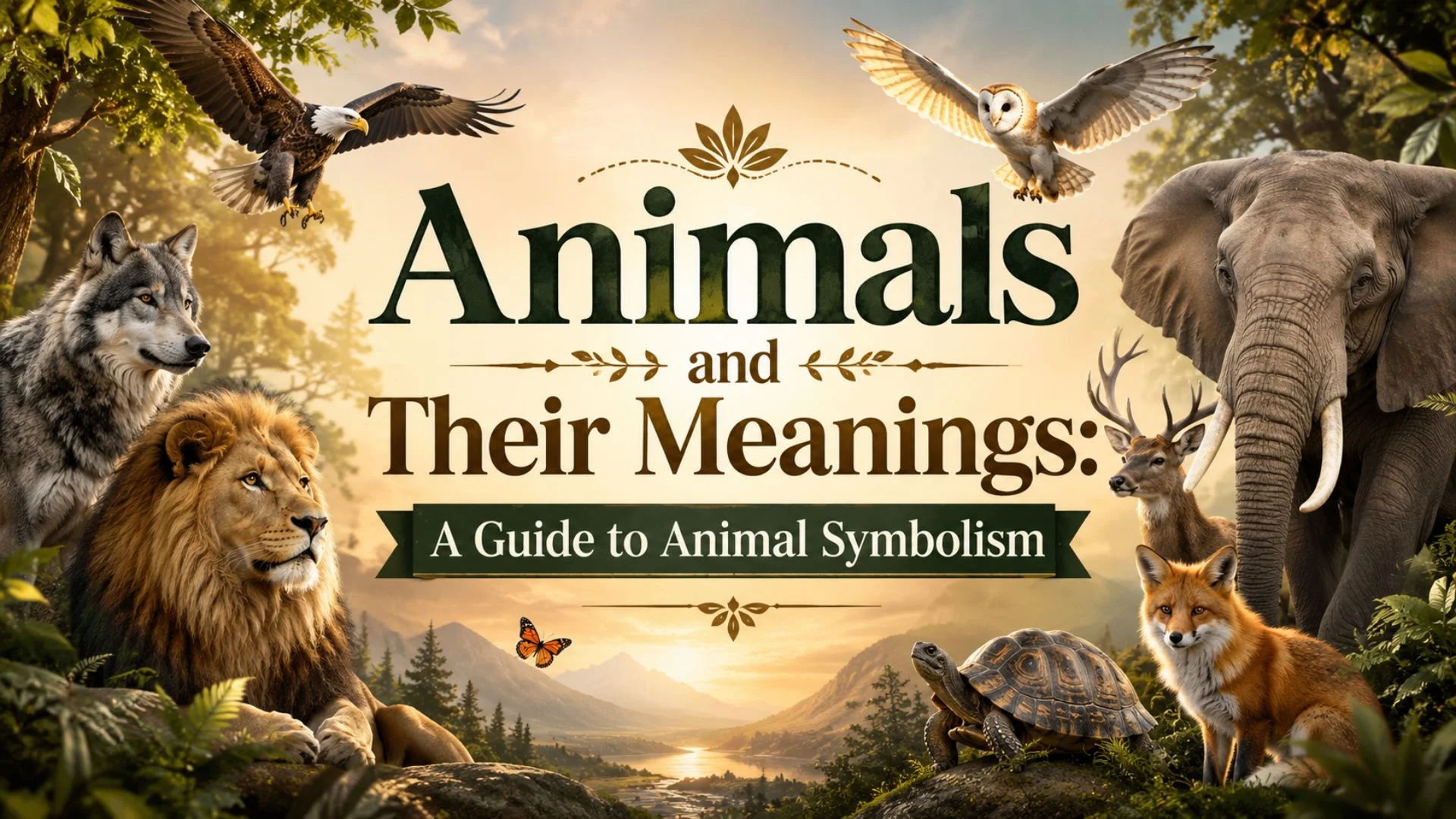
Have you ever wondered why a lion makes you think of courage or why an owl feels so wise? Animals have carried deep symbolic meaning throughout human history, appearing in ancient cave paintings, religious texts, and modern literature. Understanding animals and their meanings helps us decode these rich symbols that appear everywhere—from fairy tales to corporate logos, from dreams to spiritual practices.
Animal symbolism uses animals to represent abstract ideas, emotions, and human qualities. These symbols transcend cultures and time periods, revealing what different societies value and fear. Whether you encounter a cunning fox in a fable, a protective wolf in a dream, or a lucky cricket in your home, each creature carries a message. Some animals, like the dog, represent loyalty across almost every culture, while others, like the snake, can mean vastly different things depending on context. This guide explores the fascinating world of animal symbolism, helping you understand what these creatures truly represent.
Quick Answer
Animals and their meanings refer to the symbolic significance cultures, religions, and traditions assign to different creatures. The lion represents courage and strength, the owl symbolizes wisdom and knowledge, the dog embodies loyalty and protection, the dove stands for peace and purity, and the snake represents transformation and rebirth. These symbols appear in art, literature, dreams, and spiritual practices, with meanings varying by culture and context.
Meaning Overview Table
| Aspect | Meaning |
|---|---|
| Definition | The symbolic meanings cultures assign to animals representing human qualities, emotions, and abstract ideas |
| Pronunciation | AN-uh-muhlz and thair MEE-ningz |
| Part of Speech | Noun phrase |
| Usage | “Before getting a tattoo, research animals and their meanings to ensure the design represents what you intend.” |
| Context | Art, literature, dreams, spirituality, cultural traditions, heraldry |
Main Meaning
Definition
Animal symbolism is the practice of using animals as symbolic elements in art, literature, folklore, and spiritual traditions to convey abstract ideas that go beyond their literal meaning. Animals reflect fundamental human instincts, including the need to reproduce and protect oneself. In psychology, animals represent the non-human psyche, the world of unhuman instincts, and the unconscious areas of the mind. They often illustrate the impulses that humans must understand and integrate to achieve personal growth.
Origin
The use of animals as symbols dates back to the earliest human civilizations. The Bull was sacred to Osiris in Egypt, while in Assyria, gods were often associated with sacred animals like the goat. Serpent worship has appeared in almost every country with recorded history, from Egypt to India, Africa to Scandinavia. In ancient times, people believed that animals represented feelings and human qualities, a view that matched how heaven perceived things. The earliest known examples of animal symbolism appear in Paleolithic cave art and archaic Native American petroglyphs.
Context
Animal symbolism appears in numerous contexts across human culture. In ancient times, animals served as religious symbols, representing gods and divine qualities. In literature, authors use animal imagery to characterize people and convey themes. Fables and fairy tales are rich with animal symbolism, using creatures like the wolf to teach moral lessons. In dreams and spiritual practices, animals act as guides offering insight into personal challenges and transitions. Even today, when we say someone is a “fox” or a “lion,” we are using animal symbolism to describe human traits.
Modern Usage
Today, animal symbolism remains deeply embedded in our culture. People use animal symbols in tattoos, logos, and personal branding to convey specific qualities. Zodiac signs and spirit animals offer guidance based on animal characteristics. Many people also research animals and their meanings to understand dreams, choose pets, or find personal totems. The meanings vary by culture—a black cat brings bad luck in the United States but good luck in Britain—reflecting the ongoing evolution of these ancient symbols.
Detailed Explanation
Literal Meaning
Literally, the phrase describes the actual symbolic interpretations people assign to different animal species. These associations are not based on the animal’s physical form alone but on its observed behaviors, cultural stories, and spiritual significance.
Common Meaning
Commonly, animal symbolism uses specific creatures to represent human character traits. The lion represents courage, the owl represents wisdom, the fox represents cunning, and the dove represents peace. These associations are so widespread that they have become universal shorthand in storytelling and everyday language.
Text Meaning
In written contexts, animals and their meanings refer to the body of knowledge and reference materials—books, articles, and guides—that catalog and explain these symbols. Writers use these resources to add depth to their work through animal imagery. In modern online culture, curated lists of animal symbolism help people find meaning in dreams, choose inspiration, and create art.
Slang Meaning
In everyday language, animal symbolism appears in slang and idioms. Calling someone a “fox” means they are clever or attractive. A “snake” is a deceitful person. “Lion-hearted” means brave. These expressions have become so common that people use them without consciously thinking about the animal symbolism behind them.
Internet Meaning
Online, animal symbolism thrives on social media and interest-based platforms. People share inspiration quizzes, dream interpretation guides, and tattoo symbolism lists. Hashtags like #spiritanimal and #animalsymbolism connect users exploring these meanings. Viral content often features animals paired with their symbolic meanings in visually appealing graphics.
Social Media Meaning
On platforms like Instagram and TikTok, users frequently identify with specific animals as “inspiration” or personality symbols. This trend reflects a broader cultural interest in self-discovery and personal branding. People may describe themselves as a “wolf” for loyalty, a “butterfly” for transformation, or an “owl” for wisdom, using these symbols as shorthand for their identity.
Cultural Meaning
Culturally, animal symbolism reflects what different societies value, fear, and revere. Native American traditions revere animals as spiritual guides, with the wolf symbolizing loyalty and courage, and the bear representing strength and introspection. Japanese culture uses the crane to symbolize longevity and good fortune. Celtic traditions see the stag as a symbol of leadership and renewal. The meanings vary, but the practice of using animals to represent human qualities is universal.
Examples Table
| Example | Meaning |
|---|---|
| Lion in a dream | Courage, strength, and royal authority |
| Owl on a book cover | Wisdom, knowledge, and mystery |
| Fox in a fable | Cunning, cleverness, and adaptability |
| Dove in art | Peace, love, hope, and purity |
| Wolf in a dream | Loyalty, family bonds, and teamwork |
| Snake symbol | Transformation, rebirth, and healing; also temptation |
| Bear in Native American tradition | Strength, power, and introspection |
| Butterfly in literature | Rebirth, transformation, and the soul |
| Crane in Japanese culture | Longevity, good fortune, and fidelity |
| Eagle in heraldry | Freedom, vision, and national pride |
| Rabbit in Celtic tradition | Fertility, new beginnings, and innocence |
| Goldfish in Feng Shui | Good luck, abundance, and harmony |
| Cat in Egyptian culture | Mystery, intuition, and mystical power |
| Turtle in Chinese belief | Longevity, stability, and tranquility |
| Dragon in Japanese culture | Wisdom, balance, and supernatural power |
Related Meanings Table
| Related Term | Meaning |
|---|---|
| Lion | Courage, strength, nobility, royalty |
| Owl | Wisdom, knowledge, mystery, intuition |
| Snake | Rebirth, transformation, healing, temptation |
| Dove | Peace, love, hope, innocence |
| Wolf | Loyalty, guardianship, family, intelligence |
| Bear | Power, strength, healing, motherhood |
| Fox | Cunning, cleverness, adaptability |
| Eagle | Freedom, vision, pride, independence |
| Dog | Loyalty, protection, service, companionship |
| Cat | Mystery, independence, intuition, cleverness |
| Butterfly | Transformation, rebirth, hope |
| Dragon | Power, wisdom, balance, magic |
| Crane | Longevity, good fortune, fidelity |
| Turtle | Wisdom, longevity, stability |
| Rabbit | Fertility, abundance, innocence |
| Horse | Freedom, grace, strength, energy |
| Deer | Gentleness, sensitivity, compassion |
| Raven | Prophecy, transformation, insight |
| Goldfish | Good luck, abundance, harmony |
| Peacock | Beauty, dignity, recognition, pride |
Common Uses
People commonly use animal symbolism in several ways:
Tattoo and Body Art: Many people choose animal tattoos to represent qualities they admire or feel connected to. A lion tattoo may symbolize courage, while a wolf tattoo represents loyalty. Before getting inked, researching animals and their meanings ensures the design represents the intended message.
Dream Interpretation: Animals frequently appear in dreams as symbols or guides. Dreaming of a snake may signal transformation or a warning, while a butterfly often indicates new beginnings.
Inspiration and Totems: Many spiritual traditions, especially Native American and Celtic cultures, use animal symbols as guides for personal growth. People work with their totem animals to find insight, protection, and direction in life.
Literature and Art: Writers and artists use animal symbolism to add depth to their work. A raven in a poem may represent death or mystery, while a dove in a painting signals peace. Animal characters in fables teach moral lessons.
Zodiac and Astrology: Some zodiac signs have associated animal symbols, embodying traits of those animals such as loyalty for Taurus and imagination for Leo.
Cultural Traditions: Different cultures associate animals with luck, fortune, and protection. Goldfish bring good luck in Feng Shui, while crickets represent wisdom in Chinese tradition.
Common Mistakes
| Mistake | Correction |
|---|---|
| Assuming all animal symbols mean the same thing globally | A black cat is unlucky in the US but lucky in Britain |
| Interpreting every dream animal literally | Dreams are personal; context and your feelings matter |
| Believing all snakes are evil symbols | Snakes also represent healing, transformation, and medicine |
| Using animal symbolism without cultural understanding | Words like “inspiration” have deep roots in Native American traditions |
| Choosing a tattoo animal without researching meaning | The animal you choose might have negative associations you didn’t know |
| Confusing the lion and dragon in Eastern cultures | Lions symbolize power and strength, while dragons represent wisdom and balance |
| Ignoring the difference between domesticated and wild animals | A tamed animal often represents the opposite of its wild counterpart |
| Forgetting that animal symbols can have opposing meanings | The lion represents both Christ and Satan in Christian tradition |
| Assuming all birds symbolize freedom | Birds also represent transition between life and death, thought, and imagination |
| Using “inspiration” flippantly | Many cultures consider this phrase sacred; use it respectfully |
Related Questions
What animal symbolizes strength and courage?
The lion is the most universal symbol of strength, courage, and royal authority. Cultures worldwide have used the lion to represent power, nobility, and leadership.
What animal represents loyalty?
The dog represents loyalty across almost every culture. Wolves also symbolize loyalty, particularly to family and pack. In Native American traditions, the wolf embodies loyalty, guardianship, and teamwork.
What does a butterfly symbolize?
The butterfly symbolizes transformation, rebirth, and the soul. Many cultures see the butterfly as a symbol of hope and positive change, as it undergoes a profound metamorphosis.
What animal symbolizes wisdom?
The owl represents wisdom, knowledge, and mystery across many cultures. Ancient Greek tradition associated the owl with Athena, the goddess of wisdom. The snake also symbolizes wisdom in some traditions.
What does a snake symbolize?
The snake has dual meanings. It represents transformation, rebirth, healing, and wisdom in many cultures, but also temptation and evil in some religious traditions. The snake sheds its skin, symbolizing renewal.
What animal symbolizes peace?
The dove symbolizes peace, love, and purity worldwide. The white dove appears in many religious traditions as a symbol of the Holy Spirit, hope, and new beginnings.
What is a inspiration?
A hero is a guide that offers protection, wisdom, and insight in many indigenous traditions, particularly Native American cultures. People often identify with a hreo that reflects their personality or life path.
What does the eagle symbolize?
The eagle symbolizes freedom, vision, strength, and national pride. It appears on many national seals and represents the ability to see clearly from a higher perspective.
FAQs
What is the most powerful animal symbol?
The lion and eagle are often considered the most powerful animal symbols. The lion represents strength, courage, and royalty, while the eagle represents freedom, vision, and spiritual power.
Can one animal have different meanings in different cultures?
Yes. A black cat brings bad luck in the United States but good luck in Britain. Snakes represent healing in some cultures and evil in others. Always research cultural context.
What animal symbolizes new beginnings?
The butterfly symbolizes new beginnings and transformation. The rabbit also represents new beginnings and fertility in many traditions. The snake, with its ability to shed skin, symbolizes renewal and fresh starts.
What does a wolf tattoo mean?
A wolf tattoo typically represents loyalty, family bonds, intelligence, and teamwork. Wolves are pack animals, so they also symbolize guardianship and protection.
What does a lion tattoo mean?
A lion tattoo symbolizes courage, strength, royalty, and leadership. People often choose lion tattoos to represent their own inner strength or to honor a leader.
What animal represents freedom?
The eagle represents freedom, especially in American culture. Horses also symbolize freedom, wildness, and grace. Birds in general often symbolize freedom due to their ability to fly.
How do I find my idol instead?
Many traditions suggest observing animals that repeatedly appear in your life, dreams, or meditation. You may also resonate with an animal’s qualities that reflect your personality. Research animals and their meanings to discover which one speaks to you.
What does a crow symbolize?
Crows symbolize mystery, magic, transformation, and intelligence. In some cultures, they represent prophecy and insight. In others, they are considered tricksters.
Conclusion
Animals and their meanings offer a rich language of symbolism that has connected humans to nature and to each other for thousands of years. From the courage of the lion to the wisdom of the owl, these symbols help us express complex ideas and emotions that words alone cannot capture. Understanding animal symbolism enriches our appreciation of art, literature, and spiritual traditions, while also offering personal insight into our own character and life path. As you encounter animals in your daily life, dreams, or creative work, take a moment to consider what they might represent. You may find that these ancient symbols still hold powerful messages for your modern life.

Natalie Brooks is a content researcher and writer with a strong interest in word meanings, dream interpretations, symbolism, and cultural insights. She is passionate about creating clear, informative, and easy-to-understand content that helps readers discover the deeper meanings behind words, names, dreams, and symbols. Through her work at Meanzly, Natalie aims to make knowledge accessible and valuable for readers around the world.