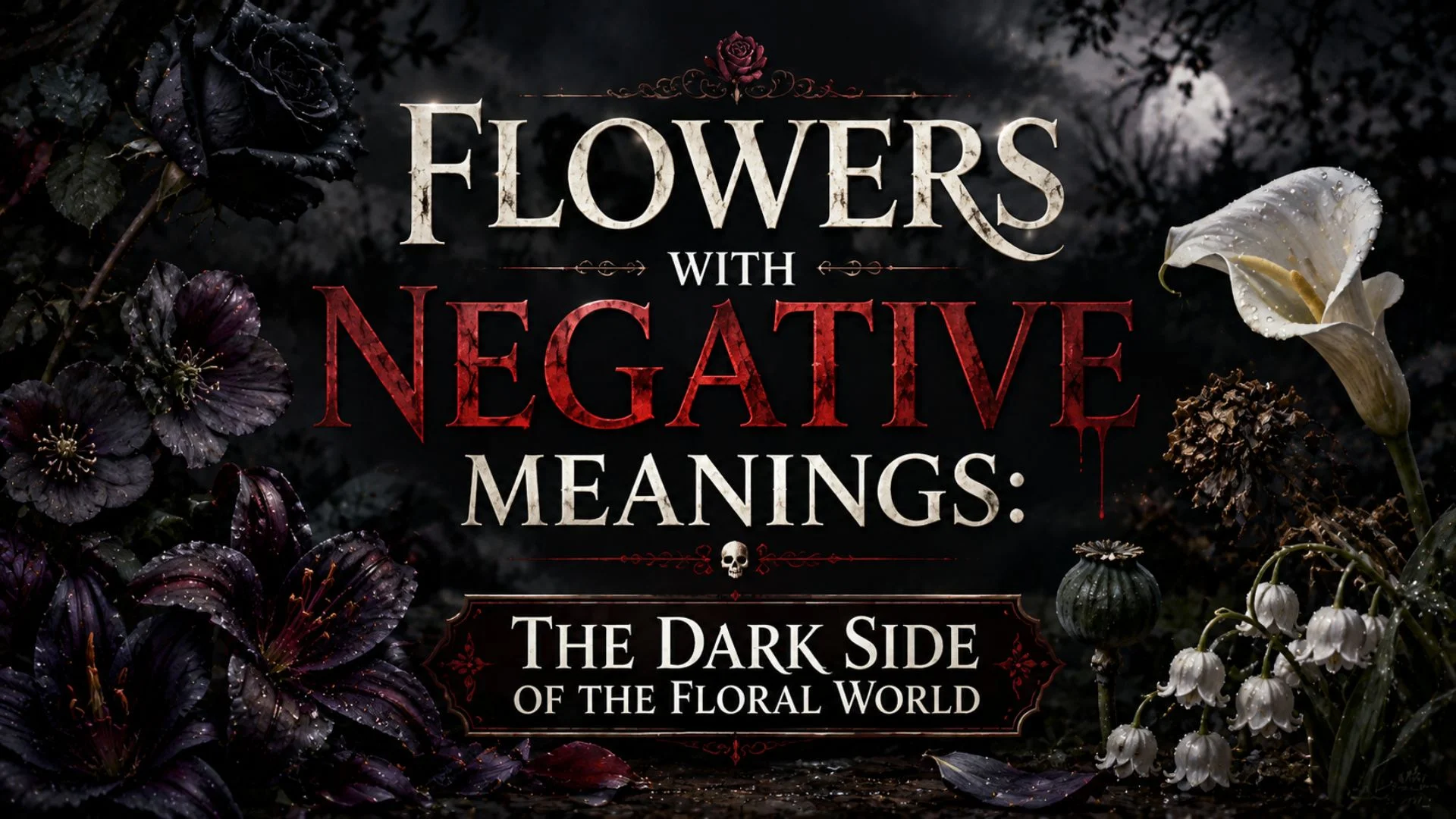
Flowers have long served as messengers of emotion. We send roses to declare love, sunflowers to convey happiness, and lilies to express sympathy. But not all flowers carry positive messages. Some blooms, whether through Victorian flower language, ancient mythology, or cultural superstition, have acquired distinctly negative meanings. Understanding flowers with negative meanings helps you avoid awkward gifting mistakes, appreciate historical symbolism, and make informed choices for bouquets, gardens, and tattoos. This guide explores the most misunderstood flowers—from the deceptive beauty of oleander to the cursed history of the foxglove—and reveals the dark stories behind nature’s most alluring blossoms.
Quick Answer
Flowers with negative meanings include yellow roses (jealousy and infidelity), orange lilies (hatred and disdain), petunias (anger and resentment), oleander (danger and deceit), foxglove (insincerity and poison), basil (hatred in Victorian floriography), and tansy (hostility). These blooms carry associations with death, betrayal, misfortune, or caution—often rooted in mythology, toxic properties, or 19th-century flower language.
Meaning Overview Table
| Aspect | Meaning |
|---|---|
| Definition | Flowers that carry negative symbolism, including hatred, jealousy, misfortune, death, or deceit |
| Pronunciation | FLOW-urz with NEH-guh-tiv MEE-ningz |
| Part of Speech | Noun phrase |
| Usage | “Before sending flowers, research flowers with negative meanings to avoid accidentally offending the recipient.” |
| Context | Floriography, floral gifting, cultural traditions, botanical history |
Main Meaning
Definition
Flowers with negative meanings are blooms associated with unpleasant or harmful symbolism. These associations come from various sources: Victorian floriography, ancient mythology, religious texts, folk traditions, and the flowers’ physical properties like toxicity or thorniness. While many people focus on positive flower meanings, understanding the darker side of floral symbolism enriches one’s appreciation of botanical history.
Origin
The language of flowers, or floriography, flourished during the Victorian era when strict social etiquette prevented open expression of emotions. People used flowers to convey secret messages. However, not all these messages were positive. The Victorians assigned negative meanings to many flowers, often based on their color, growth habits, or poisonous nature. Additionally, ancient Greek and Roman mythology contributed to the dark symbolism of certain blooms, with stories of tragic transformations, betrayal, and death.
Context
Negative flower meanings vary significantly across cultures. A flower that symbolizes death in one culture might represent rebirth in another. The context also matters—a “negative” flower given as a standalone gift sends a different message than one included in a mixed bouquet where other flowers might mitigate its meaning.
Modern Usage
Today, people consult flowers with negative meanings when choosing floral arrangements, planning gardens, or selecting tattoo designs. Knowledge of negative symbolism helps avoid social faux pas and allows for more intentional floral choices. Some people intentionally use negative-meaning flowers to send subtle messages or create edgy, meaningful arrangements.
Detailed Explanation
Literal Meaning
Literally, these flowers are simply plants. Their negative meanings come from human interpretation. A yellow rose does not know it represents jealousy—it simply blooms. The negative associations are cultural constructs that attach symbolic weight to physical characteristics like color, scent, and form.
Common Meaning
Commonly, flowers with negative meanings serve as cautionary symbols. They remind us that nature’s beauty can have a hidden dark side. Whether through toxicity, mythological association, or Victorian symbolism, these flowers communicate messages of warning, distrust, or sorrow.
Text Meaning
In written and online content, “flowers with negative meanings” refers to the growing body of reference materials, articles, and guides that catalog and explain these dark floral symbolisms. These resources help readers make informed choices and understand hidden messages in literature and art.
Slang Meaning
In modern gifting circles, giving certain negative-meaning flowers has become an inside joke or passive-aggressive gesture. For example, gifting yellow roses to a rival or orange lilies to someone you dislike serves as a coded insult.
Internet Meaning
Online, flowers with negative meanings are trending content for gardening blogs, tattoo inspiration, and Halloween-themed floral arrangements. Social media users share lists of “forbidden flowers” and their dark histories.
Social Media Meaning
On platforms like Instagram and Pinterest, images of beautiful but poisonous flowers like oleander and foxglove gain attention for their aesthetic appeal. The negative backstory often adds intrigue and depth to posts.
Cultural Meaning
Culturally, negative flower meanings appear in literature, folklore, and religious traditions. In some European traditions, certain flowers are associated with witchcraft or evil spirits. In Asian cultures, white flowers often symbolize death and mourning. Recognizing these cultural differences helps avoid miscommunication.
Examples Table
| Example | Meaning |
|---|---|
| Yellow roses | Jealousy, infidelity, or dying love |
| Orange lilies | Hatred, disdain, or extreme dislike |
| Petunias | Anger, resentment, or inability to soothe |
| Oleander | Caution, danger, deceit, and poison |
| Foxglove | Insincerity, dishonesty, and poison |
| Basil | Hatred (in Victorian floriography) |
| Tansy | Hostility, battle, and resistance |
| Aconite (Monkshood) | Misanthropy, poison, and caution |
| Cyclamen | Resignation, goodbye, and death |
| Yellow carnations | Disdain, disappointment, and rejection |
| Begonias | Danger, caution, and dark thoughts |
| Narcissus | Egotism, selfishness, and vanity |
| Red carnations (in some contexts) | Hatred and admiration mixed |
| Black roses (or deep purple) | Death, mourning, and tragic love |
| White lilies (in some Asian cultures) | Death and funerals |
Related Meanings Table
| Related Term | Meaning |
|---|---|
| Yellow roses | Jealousy, infidelity, betrayal |
| Orange lilies | Hatred, disdain, pure dislike |
| Petunias | Anger, resentment, “I am angry” |
| Oleander | Caution, danger, deceit |
| Foxglove | Insincerity, dishonesty |
| Basil | Hatred (Victorian era) |
| Tansy | Hostility, war, resistance |
| Aconite | Misanthropy, poison, danger |
| Cyclamen | Resignation, goodbye |
| Yellow carnations | Disdain, disappointment |
| Begonias | Danger, dark thoughts |
| Narcissus | Self-love, egotism, vanity |
| Red carnations | Admiration mixed with hatred |
| Black roses | Death, mourning, tragic love |
| White lilies | Death, funerals, mourning |
| Buttercups | Ingratitude, childishness |
| Chrysanthemums (in some cultures) | Death, grief |
| Hydrangeas | Coldness, heartlessness |
| Marigolds (in some cultures) | Grief, death, cruelty |
| Thistles | Mischief, danger, retaliation |
| Deadly nightshade | Silence, danger, falsehood |
| Poppies (some meanings) | Death, sleep, remembrance |
| Laurel (in some contexts) | Treachery, deceit |
| Ivy (in some contexts) | Dependence, neediness |
| Black petunias | Dark energy, rebellion |
Common Uses
People encounter flowers with negative meanings in various contexts:
Gift-giving: Savvy gift-givers research flower meanings before buying bouquets to avoid sending unintended messages. A well-intentioned gift of yellow roses could offend a partner if they know the symbolism.
Weddings: Couples choose flowers carefully to ensure all blooms in wedding arrangements carry positive or neutral meanings. Negative flowers rarely appear in wedding florals unless intentionally used for gothic-themed events.
Literature and art: Authors and artists use negative flower meanings to add layers of symbolism to their work. Characters may give or receive flowers with hidden messages that reveal plot points or motivations.
Tattoos: People choosing flower tattoos often research meanings to ensure their chosen design aligns with their personal story—whether positive or negative.
Memorial arrangements: Some cultures use specific flowers in funeral arrangements, and understanding the symbolism helps families make appropriate choices.
Common Mistakes
| Mistake | Correction |
|---|---|
| Giving yellow roses to a romantic partner | Yellow roses traditionally symbolize jealousy or infidelity—choose red or pink instead |
| Sending orange lilies as a peace offering | Orange lilies represent hatred—a terrible choice for making amends |
| Using petunias in a romantic bouquet | Petunias symbolize anger and resentment |
| Selecting oleander for an arrangement | Oleander is both toxic and symbolizes deceit—avoid entirely |
| Gifting foxglove to a friend | Foxglove means insincerity—sends the wrong message |
| Including basil in a breakup arrangement | While modern uses vary, Victorian basil meant hatred |
| Using white lilies in non-funeral contexts in Asian cultures | In many Asian cultures, white lilies symbolize death and funerals |
| Assuming all roses have positive meanings | Yellow roses are negative—don’t assume every rose is a love symbol |
| Placing hydrangeas in a romantic setting | Hydrangeas can mean coldness or heartlessness in some traditions |
| Forgetting that meanings vary by culture | A flower that is negative in one culture may be positive in another |
Related Questions
What flower symbolizes hatred?
Orange lilies are the primary symbol of hatred in Victorian floriography, followed by petunias (anger) and yellow roses (jealousy, which can lead to hatred).
What flower means unhappiness or disappointment?
Yellow carnations symbolize disappointment and disdain. Cyclamen represents resignation and sadness.
What flower means betrayal?
Yellow roses and yellow carnations both carry associations with betrayal and infidelity.
What flower means death?
White lilies often symbolize death and funerals, particularly in Asian cultures. Chrysanthemums also represent death in many European cultures.
FAQs
What flower symbolizes hatred?
Orange lilies are the strongest symbol of hatred in the language of flowers. Petunias represent anger and resentment as well.
What flower means “I hate you”?
Basil historically represented hatred in Victorian floriography, though many people don’t recognize this meaning today. Orange lilies are also associated with strong dislike.
What flower represents deceit?
Foxglove symbolizes insincerity and dishonesty. Oleander also carries associations with deceit and danger.
What flower means goodbye forever?
Cyclamen represents resignation and goodbye. Yellow roses can also signify a dying or ending love.
What flower means danger?
Oleander and aconite (monkshood) symbolize danger and caution—fitting because both are highly toxic.
What flower means jealousy?
Yellow roses are the classic symbol of jealousy and infidelity.
What flower symbolizes evil?
While no single flower universally represents evil, several have dark associations: oleander (deceit and danger), foxglove (insincerity), and aconite (misanthropy and poison).
What flower means revenge?
Tansy carries associations with hostility and battle. Some sources link it to revenge and resistance.
Conclusion
Flowers with negative meanings offer a fascinating glimpse into the complex world of floral symbolism. While we often think of flowers as universally positive, the Victorian language of flowers reveals that beauty can carry dark messages. From the jealousy of yellow roses to the hatred of orange lilies, these blooms tell stories of betrayal, anger, and caution. Understanding these meanings helps us make informed floral choices, avoid social faux pas, and appreciate the depth of botanical symbolism. Whether you are selecting flowers for a loved one, designing a gothic wedding, or researching tattoo ideas, knowing the dark side of flowers ensures your message lands as intended—and avoids unintended offense.

Natalie Brooks is a content researcher and writer with a strong interest in word meanings, dream interpretations, symbolism, and cultural insights. She is passionate about creating clear, informative, and easy-to-understand content that helps readers discover the deeper meanings behind words, names, dreams, and symbols. Through her work at Meanzly, Natalie aims to make knowledge accessible and valuable for readers around the world.