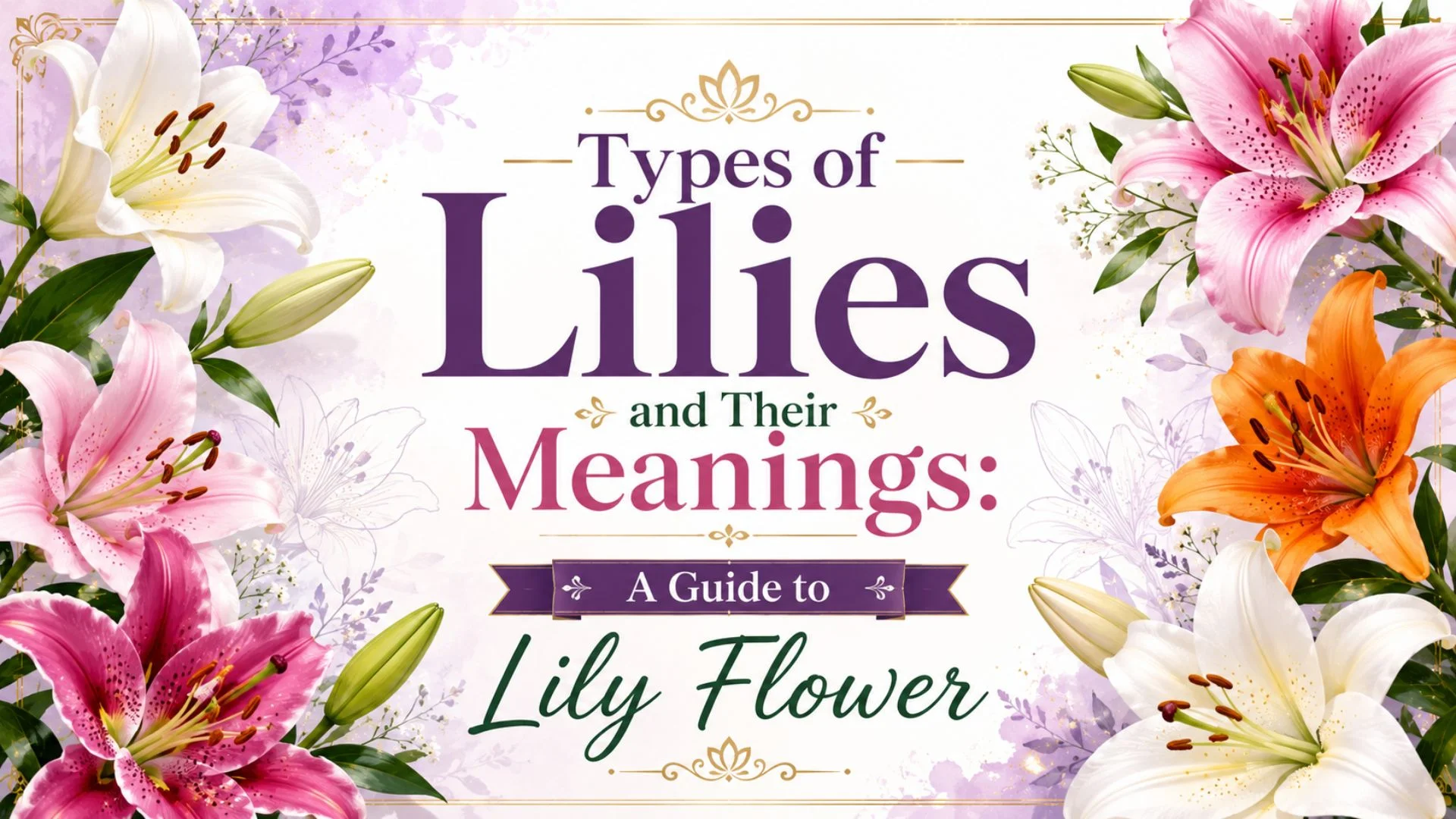
Lilies rank among the most beloved flowers in the world, second only to roses in popularity. These majestic blooms have captivated humanity for thousands of years, with evidence of their cultivation dating back to 1700 BC and appearances in Egyptian hieroglyphs symbolizing hope and freedom. Understanding the types of lilies and their meanings is essential for anyone choosing these flowers for gifts, weddings, memorials, or garden design.
Over 100 species and countless hybrids exist, offering remarkable diversity in color, shape, and fragrance. True lilies belong to the genus Lilium and feature six petals and six anthers. Whether you are selecting lilies for a romantic gesture, a sympathy arrangement, or your own garden, understanding lily symbolism ensures your choice carries the right message.
Quick Answer
Lilies symbolize purity, rebirth, beauty, and royalty across cultures. Different types of lilies carry distinct meanings—white lilies represent purity and virtue, pink lilies symbolize prosperity and admiration, red lilies convey passion, orange lilies represent confidence, and yellow lilies express gratitude and joy. The Easter lily signifies Christ’s resurrection, while the tiger lily symbolizes wealth and pride.
Meaning Overview Table
| Aspect | Meaning |
|---|---|
| Definition | The symbolic significance, cultural history, and flower language associated with different lily varieties and colors |
| Pronunciation | LIL-ee |
| Part of Speech | Noun |
| Usage | “Before sending a bouquet, learn the types of lilies and their meanings to convey the right sentiment.” |
| Context | Floral gifting, weddings, funerals, religious ceremonies, gardening, and botanical study |
Main Meaning
Definition
The term “types of lilies and their meanings” refers to the classification of lily varieties and the symbolic messages each carries. Lilies communicate emotions and intentions through their color, variety, and arrangement, forming a sophisticated floral language that has evolved across cultures and centuries.
Origin
The name “lily” comes from the Old English lilie, derived from Latin lilium and Greek leirion. The ancient Greeks revered the lily so deeply that they believed it sprouted from drops of breast milk spilled by Hera, queen of the gods. This myth established the lily as a symbol of rebirth and fertility. In Christian tradition, the Madonna lily became associated with the Virgin Mary’s purity and chastity. The lily has also adorned the coat of arms of French kings since 1179 through the fleur-de-lis symbol.
Context
Lily symbolism appears across multiple contexts. In weddings, white lilies represent commitment and new beginnings. At funerals, they symbolize the soul’s restored innocence after death. In religious settings, the Easter lily represents Christ’s resurrection. In China, lilies symbolize “forever in love” and bring good luck. The lily’s meaning shifts not only by color but also by culture, occasion, and variety.
Modern Usage
Today, lilies serve as the 30th wedding anniversary flower, symbolizing humility and devotion. They remain the May birth flower and a popular choice for Valentine’s Day, friendship bouquets, and congratulatory arrangements. Modern gifting culture relies heavily on understanding lily meanings to avoid miscommunication—for instance, orange lilies, which convey confidence in Western cultures, represent hatred in some Valentine’s contexts.
Detailed Explanation
Literal Meaning
Literally, lilies are flowering plants growing from bulbs, belonging to the genus Lilium. They feature large, showy blooms with six petals, tall upright stems, and often a sweet fragrance. Lilies come in nearly every color except blue, with many displaying spots, freckles, or variegated patterns.
Common Meaning
Commonly, lilies symbolize purity, beauty, and rebirth. This universal meaning makes them appropriate for both joyful celebrations and solemn occasions. The lily’s association with new life and rejuvenation stems from its perennial nature—dying back and re-emerging each spring.
Cultural Meaning
Culturally, lilies hold diverse meanings. In Greek mythology, they connect to Hera and symbolize motherhood and marriage. In Christianity, the Madonna lily represents the Virgin Mary’s purity.
Lilies symbolize a century of love and good fortune in China. In Persian tradition, royal palaces displayed white lily buds. Feng Shui practitioners regard the lily as an emblem of summer and abundance.
Color Meaning
The color of a lily significantly alters its message. White lilies symbolize purity, virtue, and innocence—making them traditional wedding and funeral flowers. Pink lilies represent prosperity, abundance, femininity, and admiration. Red lilies convey love, passion, and desire—a romantic alternative to red roses. Orange lilies symbolize confidence, pride, and wealth. Yellow lilies express gratitude, joy, and good health. Purple lilies represent royalty, elegance, and spirituality.
Internet and Social Media Meaning
Online, lilies feature prominently in floral content, wedding inspiration, and memorial tributes. Hashtags like #lilyflower and #lilysymbolism help users explore meanings before purchasing or gifting. On social media, lilies appear as aesthetic symbols of elegance, natural beauty, and emotional expression.
Examples Table
| Example | Meaning |
|---|---|
| White lilies at a wedding | Purity, commitment, and new beginnings |
| White lilies at a funeral | Restored innocence of the departed soul |
| Pink lilies as a gift | Prosperity, abundance, and admiration |
| Red lilies to a partner | Love, passion, and desire |
| Orange lilies for congratulations | Confidence, pride, and wealth |
| Yellow lilies as a thank-you | Gratitude, joy, and good health |
| Easter lily in church | Christ’s resurrection and hope |
| Tiger lily in a garden | Wealth, pride, and striking beauty |
| Purple lilies for a special occasion | Royalty, elegance, and spirituality |
| Stargazer lily in a bouquet | Wealth, prosperity, and sometimes sympathy (white variety) |
Related Meanings Table
| Related Term | Meaning |
|---|---|
| Purity | Innocence and virtue, especially in white lilies |
| Rebirth | New life and rejuvenation, from Greek mythology and spring blooming |
| Royalty | Elegance and nobility, associated with French heraldry and purple lilies |
| Motherhood | Fertility and nurturing, from the Hera myth |
| Passion | Romantic love and desire, primarily in red lilies |
| Gratitude | Thankfulness and appreciation, expressed through yellow lilies |
| Confidence | Self-assurance and pride, symbolized by orange lilies |
| Prosperity | Wealth and abundance, particularly pink lilies |
| Femininity | Grace and elegance, represented by pink lilies |
| Devotion | Commitment and loyalty, especially in 30th anniversary gifting |
| Chastity | Purity and modesty, linked to the Virgin Mary |
| Sympathy | Comfort and mourning, expressed through white stargazer lilies |
| Friendship | Devotion and connection, through Peruvian lilies |
| Spirituality | Wonder and deeper meaning, represented by purple lilies |
| Hope | Optimism and freedom, from Egyptian hieroglyphic symbolism |
Common Uses
People commonly use lilies in weddings, where white varieties symbolize commitment and new beginnings. Lilies appear prominently in bridal bouquets and ceremony decorations. At funerals, white lilies offer comfort and symbolize the soul’s restored purity after death.
For gifting, people choose lilies for 30th wedding anniversaries, birthdays for those born in May, and occasions requiring thank-you or congratulatory messages. Lily bouquets rank among the most popular floral gifts worldwide, second only to roses.
In religious ceremonies, the Easter lily holds special significance as a symbol of Christ’s resurrection. In garden settings, gardeners prize lilies for their dramatic blooms, long vase life, and ability to return year after year.
Common Mistakes
| Mistake | Correction |
|---|---|
| Assuming all lilies have the same meaning | Lily symbolism varies by color and variety—white and red lilies convey very different messages |
| Sending orange lilies on Valentine’s Day | In some cultures, orange lilies convey hatred—choose red or pink for romance |
| Giving white lilies to celebrate a new job | White lilies are more appropriate for sympathy and weddings—yellow or orange better suit congratulations |
| Not knowing the 30th anniversary connection | Lilies are the traditional 30th wedding anniversary flower, symbolizing devotion |
| Forgetting lilies are toxic to cats | Lily flowers can cause kidney failure in cats—avoid sending them to pet owners |
| Assuming all lilies are fragrant | Asiatic hybrids have little to no scent— lilies are known for strong fragrance |
| Calling any flower with “lily” in its name a true lily | Only plants in the genus Lilium are true lilies—calla and Peruvian lilies belong to different families |
| Placing lilies in poor conditions | Lilies can last up to three weeks if pollen is removed and stems are properly maintained |
| Overlooking cultural meanings | In China, lilies symbolize 100 years of love—in Greece, they connect to Hera and motherhood |
| Choosing lilies without considering occasion | White lilies suit weddings and funerals—pink and red better fit celebrations of love |
Related Questions
What are the nine divisions of lilies?
Botanists classify lilies into nine divisions based on their parentage and characteristics. Divisions include Asiatic Hybrids (Division 1), Martagon Hybrids (Division 2), Candidum Hybrids (Division 3), American Hybrids (Division 4), Longiflorum Hybrids (Division 5), Trumpet and Aurelian Hybrids (Division 6), Hybrids (Division 7), Interdivisional Hybrids (Division 8), and Species (Division 9).
What is the most popular type of lily?
Asiatic Hybrids are the most popular lilies worldwide. They come in nearly every color, are long-lasting, but have little to no fragrance.
What do white lilies symbolize at funerals?
White lilies at funerals symbolize that the departed soul has received restored innocence and purity after death. They offer comfort and represent the soul’s peaceful transition.
FAQs
What do different colors of lilies mean?
White lilies symbolize purity and virtue. Pink lilies represent prosperity and admiration. Red lilies convey passion and desire. Orange lilies symbolize confidence and pride. Yellow lilies express gratitude and joy. Purple lilies represent royalty and spirituality.
Are all lilies fragrant?
No, lilies and some trumpet varieties are highly fragrant with an enchanting sweet scent. Asiatic hybrids, despite their vibrant colors, have little to no fragrance.
What is the difference between a true lily and a calla lily?
True lilies belong to the genus Lilium and have six petals and six anthers. Calla lilies are from a different genus (Zantedeschia) and are not true lilies.
Why are lilies the 30th anniversary flower?
Lilies symbolize humility and devotion, making them meaningful gifts for couples celebrating 30 years of marriage.
What is the Easter lily?
Easter lilies (Division 5: Longiflorum Hybrids) are pure white, trumpet-shaped flowers with sweet fragrance. They bloom during Easter and symbolize Christ’s resurrection.
What does a lily symbolize in Chinese culture?
In Chinese culture, the lily symbolizes “forever in love” and represents 100 years of love and good luck, making them popular wedding flowers.
Are lilies toxic to cats?
Yes. Lilies are highly toxic to cats and can cause kidney failure or even death if ingested. Keep them away from pets.
What is the May birth flower?
The lily is the birth flower for May, associated with purity, grace, and renewal.
Conclusion
The types of lilies and their meanings offer a rich tapestry of symbolism spanning ancient mythology, religious tradition, and modern gifting culture. From the pure white Madonna lily associated with the Virgin Mary to the fiery red lily representing passionate love, each variety carries a unique message. Understanding these meanings empowers you to choose lilies that perfectly express your sentiments—whether celebrating a wedding, comforting a grieving friend, or congratulating a loved one’s achievement.
People have cultivated lilies for over 3,000 years, and they remain the second most popular flower in the world. Their longevity in human culture speaks to their timeless beauty and profound symbolic power. When you gift lilies, you join a tradition that spans continents and centuries—from Greek myths of goddesses to Chinese symbols of eternal love. Whether you select Asiatic, or trumpet varieties, remember that every lily tells a story. Choose wisely, and your floral message will speak loud and clear.

Natalie Brooks is a content researcher and writer with a strong interest in word meanings, dream interpretations, symbolism, and cultural insights. She is passionate about creating clear, informative, and easy-to-understand content that helps readers discover the deeper meanings behind words, names, dreams, and symbols. Through her work at Meanzly, Natalie aims to make knowledge accessible and valuable for readers around the world.