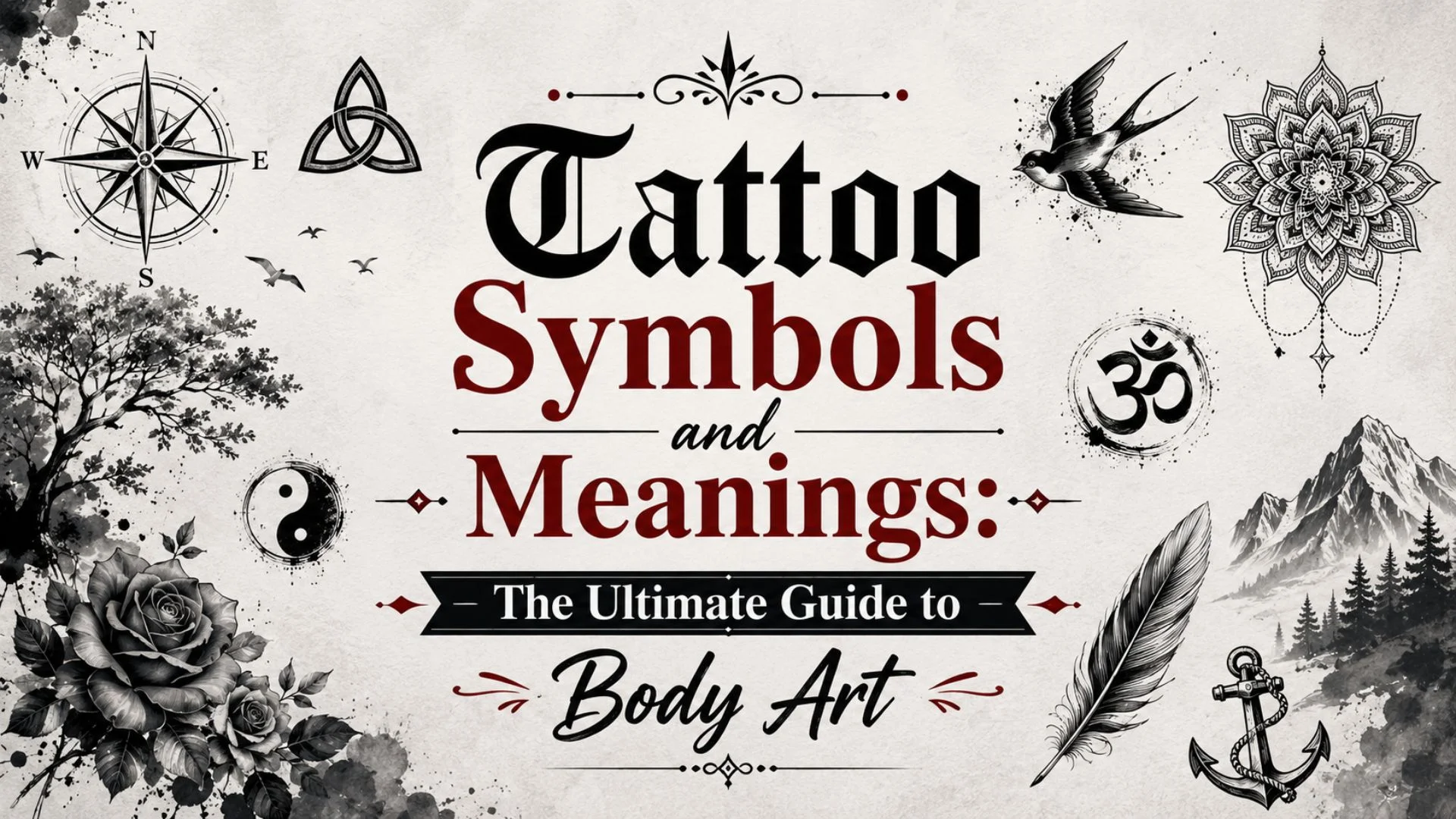
Tattoos have been a powerful form of human expression for thousands of years, with the earliest known tattooed person, Ötzi, living around 3330 BC. Today, approximately one in three people has at least one tattoo, making body art one of the most popular ways of expressing identity, beliefs, and personal stories . Tattoo symbols and meanings form a complex visual language that spans cultures, traditions, and time periods.
Whether you’re considering your first tattoo or researching to understand the ink you already wear, understanding the symbolism behind tattoo designs is crucial. Each tattoo carries meaning—sometimes obvious, often hidden, and occasionally misinterpreted. From ancient protective symbols to modern memorials, tattoo art communicates without words. This guide explores the rich cultural history behind popular motifs found across tribal, traditional, Japanese, and realistic tattoo styles .
Quick Answer
Tattoo symbols and meanings refer to the rich visual language embedded in body art, where designs like anchors (stability), swallows (safe return), skulls (mortality), and lotus flowers (resilience) carry deep cultural, spiritual, and personal significance. These meanings derive from ancient traditions, maritime culture, prison history, and modern self-expression. Understanding tattoo symbolism helps ensure your chosen design authentically represents your intended message and avoids unintended cultural appropriation or misinterpretation .
Meaning Overview Table
| Aspect | Meaning |
|---|---|
| Definition | The symbolic significance, cultural history, and personal interpretation behind tattoo designs |
| Pronunciation | ta-TOO SIM-buhls and MEAN-ings |
| Part of Speech | Noun phrase |
| Usage | “Before getting inked, research tattoo symbols and meanings to ensure your design represents what you intend.” |
| Context | Tattoo artistry, cultural studies, personal expression, body modification, and fashion |
Main Meaning
Definition
Tattoo symbols and meanings encompass the full range of cultural, spiritual, personal, and historical significance attached to permanent body art designs. Every line, image, and placement choice communicates something—whether representing strength, love, protection, transformation, or remembrance .
Origin
The practice of tattooing has ancient global roots. The word “tattoo” derives from the Polynesian word tatau, meaning “to strike,” referencing the traditional method of tapping pigment into the skin with sharp tools . Throughout history, tattoos served as rites of passage, marks of status and rank, religious and spiritual devotion, decorations for bravery, pledges of love, protective amulets, and, in some cases, punishment .
Context
Tattoo symbolism varies dramatically across cultures and contexts. A symbol may represent vastly different things depending on geographic origin, tattoo style, placement on the body, and the wearer’s personal story. What holds sacred meaning in one culture may be misappropriated or misunderstood in another .
Modern Usage
IIn the 21st century, tattoos have transitioned from sailor, prison, and counterculture associations to mainstream acceptance.People now choose tattoos for artistic, cosmetic, sentimental, memorial, religious, and spiritual reasons. The search for identity, self-expression, and connection to community drives much of modern tattoo culture .
Detailed Explanation
Literal Meaning
On the most basic level, a tattoo is pigment inserted into the dermis layer of skin to create a permanent design. Tattoo artists use either traditional hand-tapped methods or modern electric machines to apply ink .
Common Meaning
Commonly, tattoos are seen as personal statements—visual representations of a person’s identity, values, experiences, or beliefs. A tattoo can commemorate a loved one, signify membership in a community, celebrate cultural heritage, or simply express aesthetic preferences .
Text Meaning
In texts and online discussions, “tattoo symbols and meanings” refers to the growing body of resources—articles, books, and social media content—that decode the significance of popular designs. This has become an essential tool for people choosing tattoos and those interested in body art culture .
Slang Meaning
Within tattoo communities and prison cultures, certain symbols carry specific coded meanings. For example, teardrops under the eye often indicate a prison sentence or murder, while spider webs on elbows can signify time served .
Internet Meaning
Online, tattoo symbolism is trending with inspiration photos, meaning guides, and cultural discussions. Hashtags like #tattoomeaning and #inkedexplained help users explore designs before committing to permanent ink.
Social Media Meaning
On platforms like Instagram and Pinterest, tattoo symbols and meanings are curated as aesthetic inspiration. The meaning often becomes secondary to visual appeal, though many users still appreciate knowing the backstory behind their chosen design.
Cultural Meaning
Culturally, tattoos can represent heritage, resistance, or belonging. For Māori, moko is sacred—facial tattoos carry genealogical and social meaning. In Polynesia, tattooing is a cultural revival following colonial suppression. In Western cultures, tattoos have shifted from outsider status to widespread acceptance, though they can still hinder employment in certain fields .
Examples Table
| Example | Meaning |
|---|---|
| Anchor tattoo | Stability, strength, and hope; traditional sailor symbol of staying grounded |
| Swallow tattoo | Safe return home; historically worn by sailors after 5,000 nautical miles |
| Teardrop tattoo | Mourning, prison sentence, or murder; varies by context and placement |
| Spider web on elbow | Time served in prison; web represents being trapped |
| Semicolon tattoo | Mental health awareness and suicide prevention; represents continuation of life |
| Dragon rising toward sun | Strength and overcoming adversity in Japanese tattoo tradition |
| Koi carp swimming upstream | Perseverance, determination, and strength through struggle |
| Lotus flower | Resilience, spiritual awakening, and beauty arising from hardship |
| Barbed wire tattoo | Crown of thorns or, in some contexts, a life prison sentence |
| Butterfly | Transformation, freedom, and personal growth |
| Crossed arrows | Truce, peace, or friendship |
Related Meanings Table
| Related Term | Meaning |
|---|---|
| Anchors | Stability, strength, groundedness |
| Angels | Protection, guidance, spirituality |
| Butterflies | Transformation, rebirth, freedom |
| Compass | Direction, guidance, safe travels |
| Crowns | Power, leadership, royalty |
| Daggers | Betrayal, sacrifice, protection |
| Doves | Peace, love, freedom |
| Dragons | Power, wisdom, strength (especially in Japanese and Eastern traditions) |
| Feathers | Freedom, spiritual connection, courage |
| Hearts | Love, devotion, remembrance |
| Lions | Strength, courage, leadership |
| Moons | Intuition, cycles, feminine energy |
| Roses | Beauty, love, secrecy, or mourning |
| Skulls | Mortality, impermanence, overcoming death |
| Suns | Life, vitality, new beginnings |
Common Uses
Tattoo symbols are commonly used to express identity and commemorate life events. Many people choose tattoos to memorialize a loved one who has passed, often incorporating names, dates, and meaningful symbols like hearts or angels. Others get inked to represent personal milestones, such as overcoming illness, recovering from addiction, or completing a challenging life chapter.
Cultural pride drives many tattoo choices—people of Polynesian, Māori, Celtic, or Japanese heritage often wear traditional designs to honor their ancestry. Religious and spiritual tattoos, including crosses, mandalas, and Hamsa hands, serve as visible expressions of faith and protection.
Prison and gang tattoos function as coded communication, signaling affiliation, status, and criminal history. Meanwhile, modern fashion tattoos are chosen primarily for aesthetic appeal—though even these carry meaning, whether intentional or not .
Common Mistakes
| Mistake | Correction |
|---|---|
| Assuming a symbol means the same thing in all cultures | Research the cultural origins and significance of a design before committing |
| Choosing a design without understanding its meaning | Learn what a symbol represents before getting it permanently inked |
| Ignoring tattoo placement significance | Placement can change or amplify a tattoo’s meaning (e.g., teardrop under the eye) |
| Getting a foreign language tattoo without verification | Always verify translations from native speakers |
| Copying a celebrity tattoo without understanding its personal meaning | That symbol might mean something very different to you than to the original wearer |
| Believing all traditional symbols are positive | Some symbols (like skulls or daggers) have complex, mixed meanings |
| Not checking prison or gang associations | Some designs carry unintended criminal symbolism |
| Forgetting that meanings evolve | Tattoo symbolism changes over time and across subcultures |
| Getting a symbol that conflicts with your values | Ensure the design truly aligns with your beliefs and identity |
| Ignoring the artist’s advice | Professional tattoo artists often know when clients are misinterpreting a design |
Related Questions
What does a semicolon tattoo mean?
The semicolon tattoo represents mental health awareness and suicide prevention. It symbolizes that the wearer’s story isn’t over yet—just as a semicolon connects two related sentences, the tattoo marks a continuation rather than an ending .
What is the meaning behind a teardrop tattoo?
A teardrop tattoo traditionally indicates the wearer has killed someone, served a prison sentence, or lost someone close. The outline alone can mean attempted murder. Context and placement matter significantly .
What do swallows symbolize in tattoos?
Swallows traditionally represent a sailor’s safe return home. In modern contexts, they can also symbolize finishing one’s prison sentence—a play on “doing your bird” .
FAQs
What is the most common tattoo symbol and its meaning?
Anchors are among the most common tattoo symbols, representing stability, strength, and hope. They originated with sailors as a sign of staying grounded despite life’s storms .
Do all tattoos have meaning?
Not all tattoos carry deliberate meaning. Some people choose designs purely for aesthetic reasons. However, even “meaningless” tattoos develop personal significance over time .
How do I choose a meaningful tattoo symbol?
Research thoroughly—understand the cultural, historical, and traditional significance of any design you consider. Also reflect on your personal connection to the symbol .
What do skull tattoos mean?
Skull tattoos symbolize mortality, the impermanence of life, and sometimes overcoming death. In some cultures, skulls represent protection or the transition of the soul to the afterlife .
Can tattoo meanings change?
Yes. Tattoo symbolism evolves across time and subcultures. A design can also change in personal meaning as the wearer’s life and values shift.
Are there tattoos with negative meanings?
Some tattoos—like certain prison or gang symbols—carry negative or dangerous connotations. Examples include teardrops, barbed wire, and specific numbers. Always research thoroughly .
What do Japanese tattoo symbols represent?
Japanese tattoo symbols often represent strength, wisdom, and overcoming adversity. Dragons, koi carp, and lotus flowers are popular choices with deep cultural significance .
Why do people get tattoos of symbols they don’t understand?
Often, people choose designs for visual appeal, celebrity influence, or trendiness without researching meaning. This can lead to cultural appropriation or unintended symbolism .
Conclusion
Understanding tattoo symbols and meanings transforms body art from decoration into powerful personal and cultural communication. From ancient protective markings to modern semicolon tattoos representing mental health awareness, each design tells a story. The history of tattooing reveals a fascinating journey—once associated with outsiders, today ink graces bodies across all walks of life, with one in three people wearing at least one tattoo .
Before getting a tattoo, take time to research its symbolism, cultural context, and possible alternative meanings. Consult professional tattoo artists who understand both design and significance. Remember that tattooing is an ancient custom practiced across every continent, and your choice connects you to this rich, global tradition.
Whether you choose an anchor, a lotus, a skull, or a custom design, ensure it genuinely represents your identity, values, and personal journey. Your tattoo is not just ink—it is language written on your skin.

Natalie Brooks is a content researcher and writer with a strong interest in word meanings, dream interpretations, symbolism, and cultural insights. She is passionate about creating clear, informative, and easy-to-understand content that helps readers discover the deeper meanings behind words, names, dreams, and symbols. Through her work at Meanzly, Natalie aims to make knowledge accessible and valuable for readers around the world.